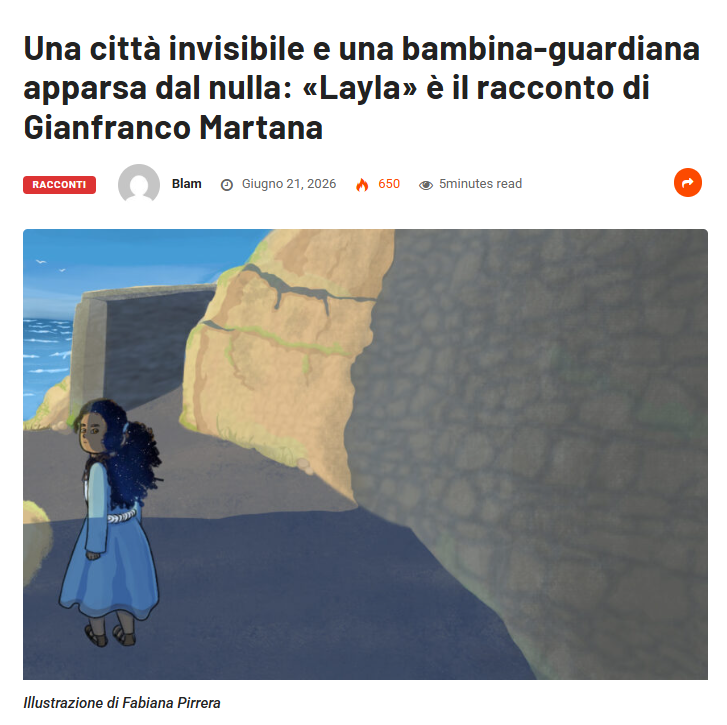
Layla
In the medina of Tangier, a tourist encounters a mysterious young girl who will show him the way out of that labyrinth.
Read on Blam!I write stories.
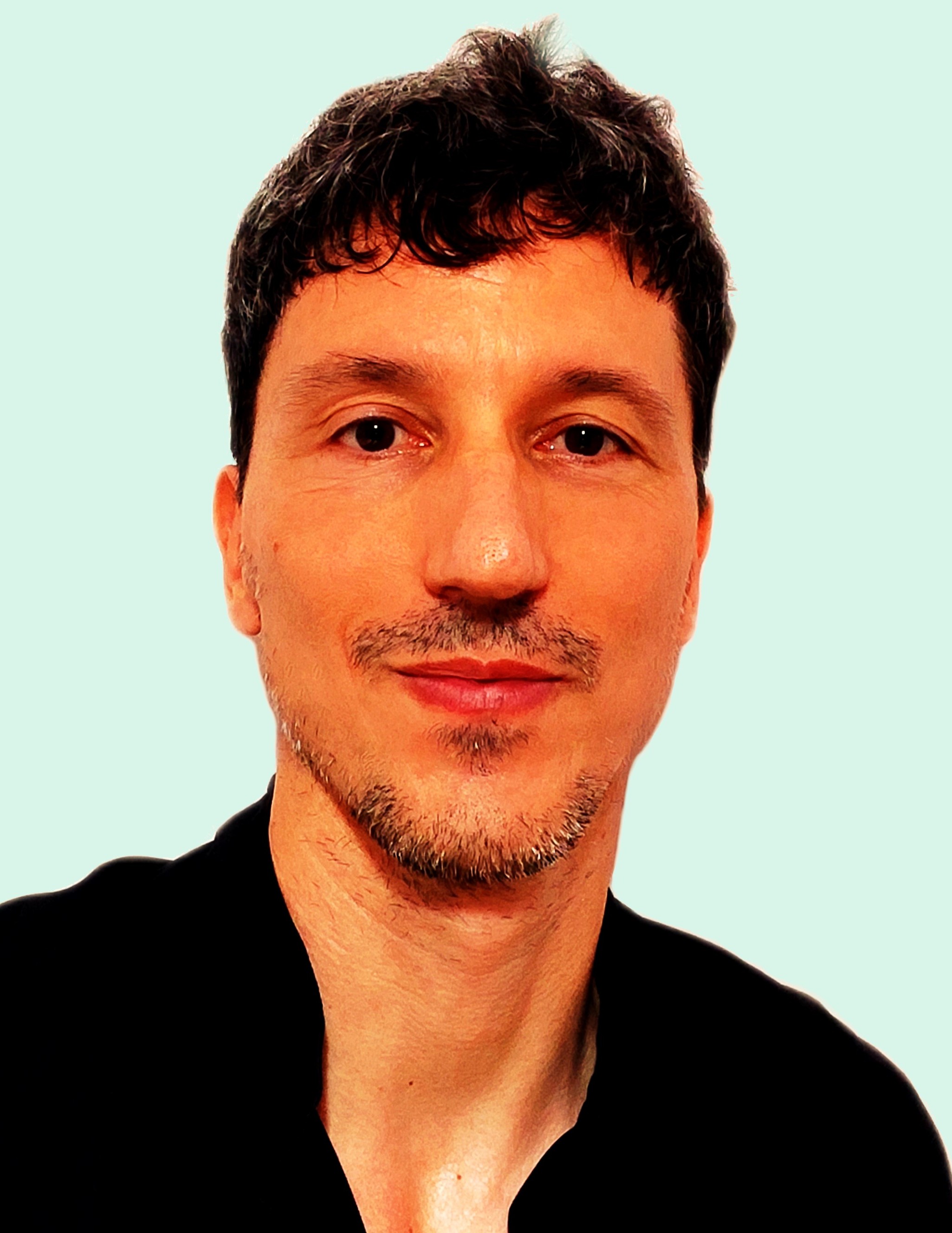
I grew up in Salerno, spent six years in Brighton, and have been living in Valencia since 2018. I was born by the sea by chance; I stayed there by choice.
After graduating with a degree in Italian Literature and a thesis on Luigi Meneghello, I completed a PhD exploring the relationship between early 20th-century Italian writers and cinema.
I directed the short film Indice di frequenza starring Alessandro Haber and was a finalist for the prestigious Premio Solinas with the screenplay Mammaliturchi!, which I have since adapted into a novel (currently unpublished).
I have published the novel Un’opera di bene and around forty short stories featured in literary magazines and anthologies in Italy and Spain.
I am currently working on a collection of short stories about childhood and adolescence (in Italian and French), as well as a novel following the story of a small-town boy determined to become a journalist at all costs.
My stories often begin when a seemingly insignificant detail shifts the way we look at reality. From that moment on, nothing is ever the same.
When I’m not writing, I take tourists to discover Valencia. Thanks to this job, I have almost managed to achieve my lifelong dream: becoming a storyteller.
I speak fluent Spanish, French, and English, and I get by in Valencian. Then, with an excess of optimism, I decided to study Arabic.
I wish I could play the piano and fix broken things. I have no talent for either.
A selection of my short stories published in literary magazines (only in Italian).
In the medina of Tangier, a tourist encounters a mysterious young girl who will show him the way out of that labyrinth.
Read on Blam!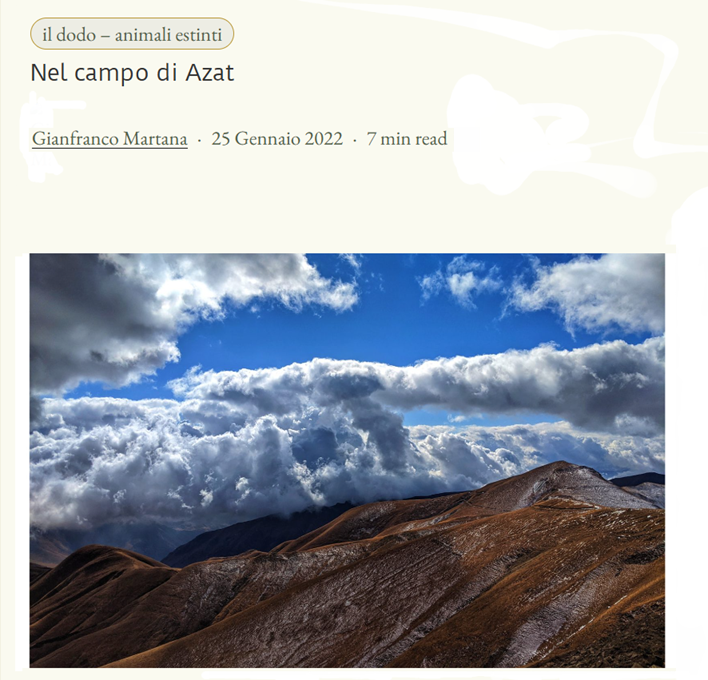
A missile, launched by god knows whom, embeds itself without exploding in a field on the outskirts of a Caucasian village, turning the lives of its inhabitants upside down.
Read on Altri animali
A lonely and impoverished young man regularly visits the supermarket in search of discounted food. The sudden appearance of another man, who begins to contest his meager spoils, might force him to rethink his own life.
Read on 'tina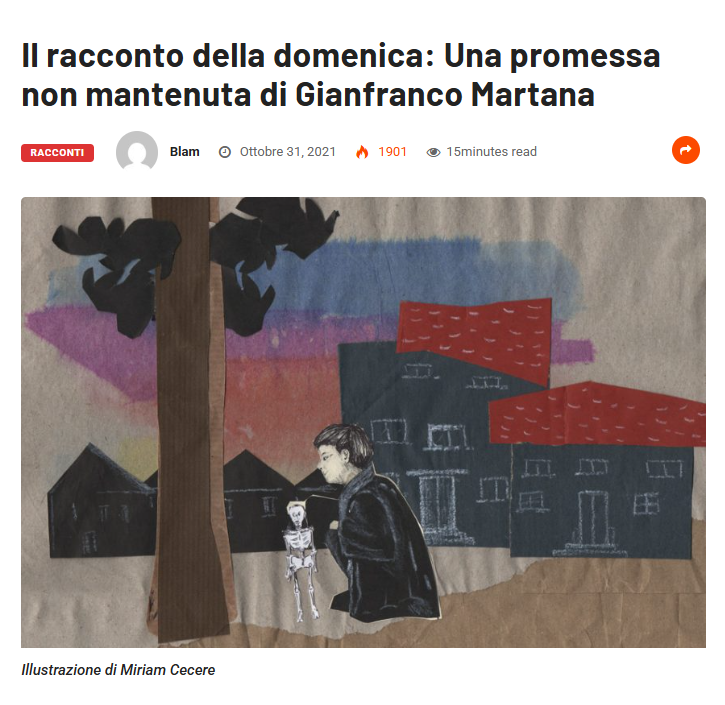
A young boy sets out to bury a toy skeleton, but the undertaking proves to be far more difficult than expected.
Read on Blam!
During Covid, people would lean out of their windows to sing. Some did it just to catch another glimpse of the young neighbor opposite.
Read on Pastrengo
A young boy recounts the devastating earthquake of November 23, 1980, in Southern Italy. That night, alongside him, an entire community finds itself suspended between fear and survival.
Read on Pastrengo
A young girl discovers the pleasure of her own body. When her first period arrives, she is convinced she has inflicted a fatal wound upon herself.
Read on Offline
The death of his father prompts a young philosophy professor to process a conflicted bond. Through childhood memories and the sea, resentment gives way to silence.
Read HERE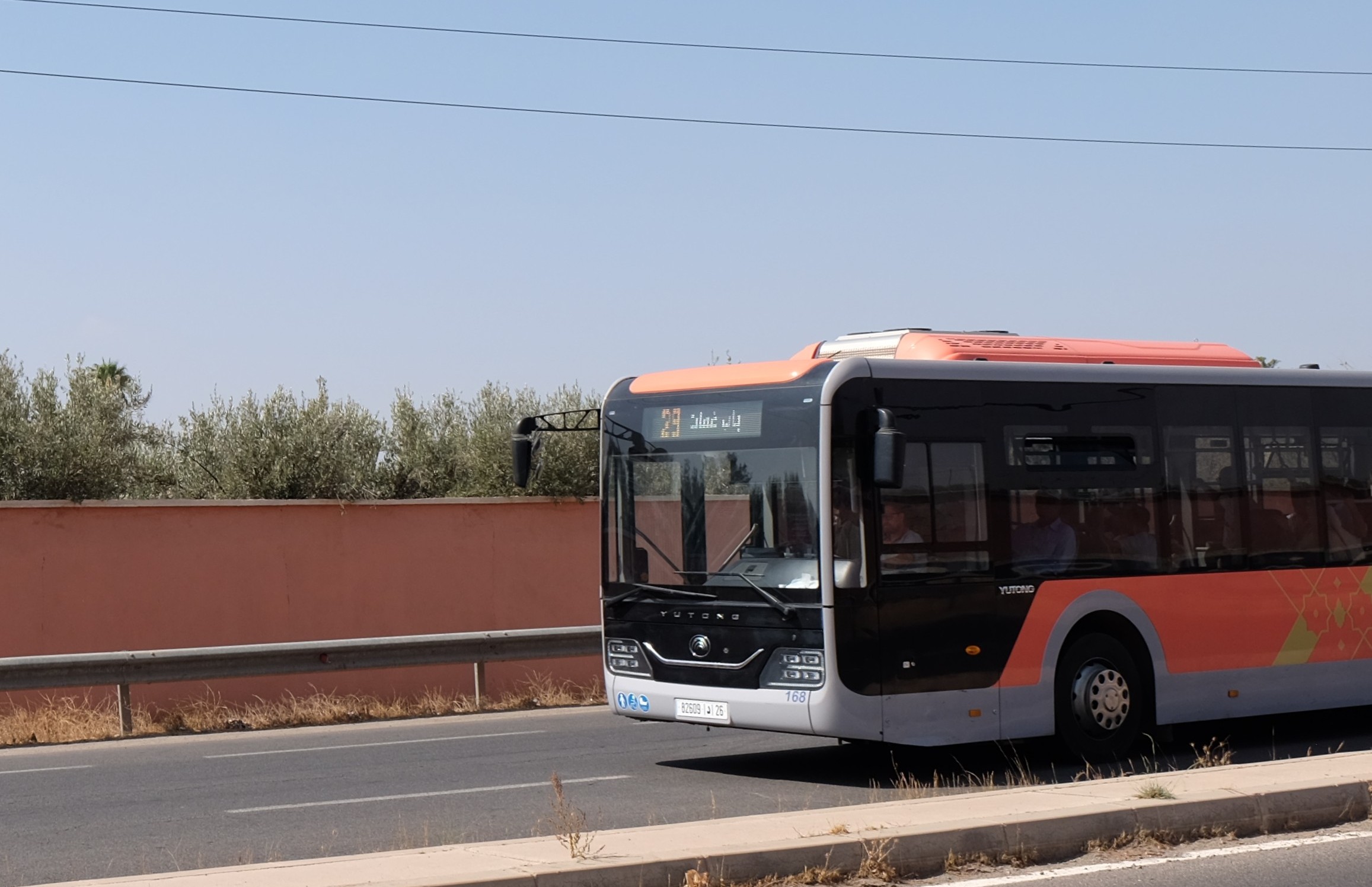
The day after arriving at the farm where I am staying for a month, I go into town to do some shopping. On the way back, I decide to take bus 29 from the Bab Ghmat terminus. That decision, besides saving me taxi fare, gave me the spark for a new story—mostly thanks to a heated argument between an older man and a young man over two seats “reserved” by the latter when there were already no seats left.
There are two things I’d like to highlight here. The first, picking up on what I touched upon in my previous post, concerns my gaze—or rather, its scope. After the encounter with the young girl in the Tangier medina, and after seeing people with scales on the sidewalk, I’ve gained access to a new kind of contact with the locals. Indeed, it’s not often that a tourist takes urban or suburban buses. However, I don’t consider it a more “authentic” experience—an adjective, paradoxically, beloved by travel agencies. Authenticity, if it exists, lives in the eye of the beholder, making it my responsibility as a writer.
The second thing I wanted to mention is my frustration at witnessing that confrontation without understanding a single word. That’s why, at a certain point, I discreetly turned on the voice recorder on my phone, confident that sooner or later I’d manage to have everything translated and use those words (or not, but that’s another story) in the narrative I knew I would write.
I also wanted to reassure my readers: the two men stopped just short of coming to blows, so no one got hurt. At least not until—first among all the passengers—I got off the bus, breathing a huge sigh of relief.
For some time now, I’ve been reflecting on how a European writer looks at a country like Morocco. Having visited several times, I started feeling the desire to set stories there. The first — titled Layla and published in the magazine Blam! — grew out of an experience that other foreigners before me have perhaps recounted: a young girl offering to guide a tourist through the medina.
Does a figure like that belong more to Morocco or to the imaginary through which we Europeans have learned to view it? Still, the risk is real: that our gaze comes to a halt precisely where the distance between us and them seems most obvious. Should one know a country better before writing about it? And yet, knowledge never arrives all at once, and in any case, it will never be complete. However, there is a distinction between using an image as confirmation of what we already think we know and using it as a starting point, as a question.
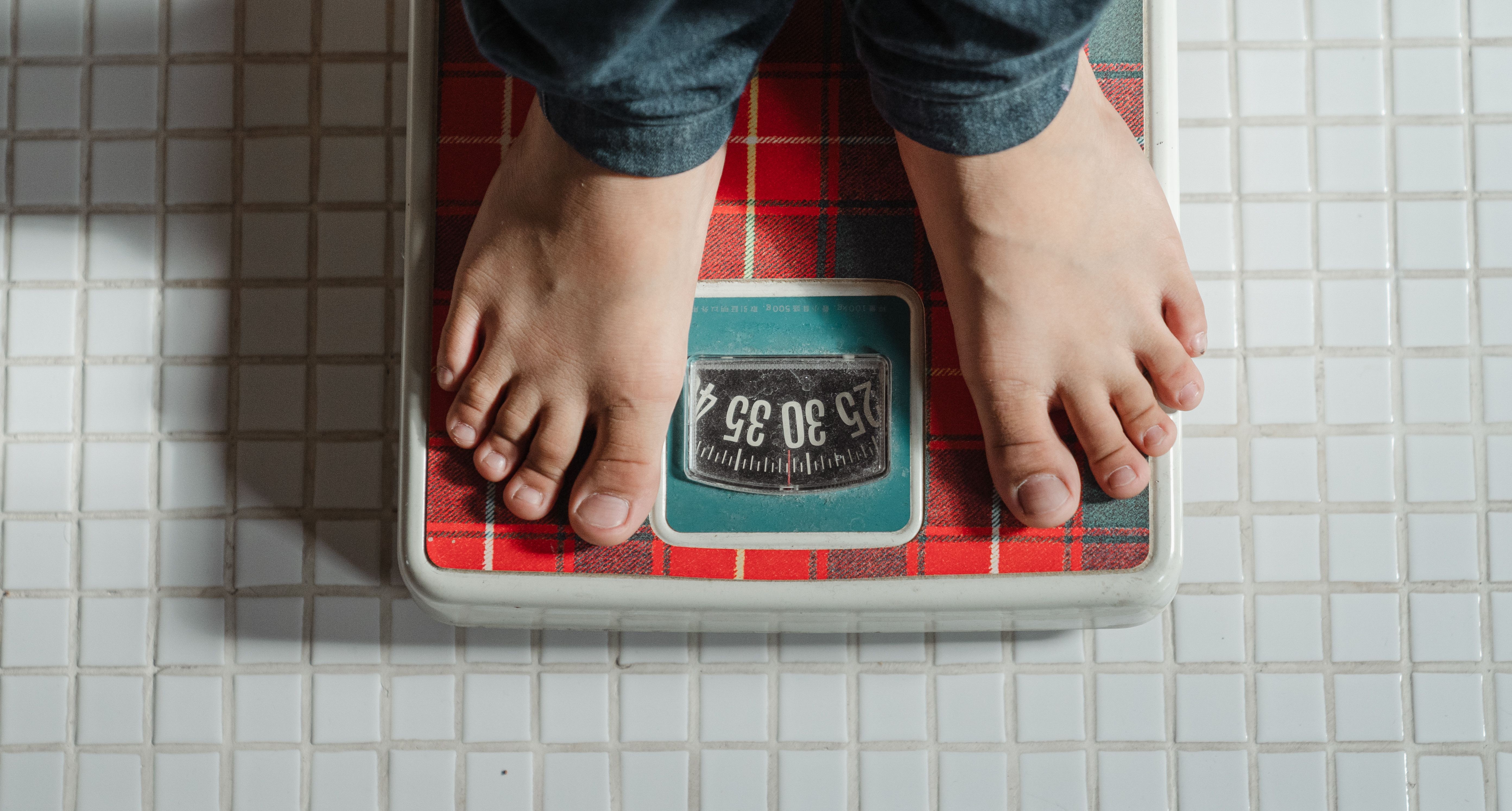
The story I’ve begun developing stems from another image that is perhaps overused: a man sitting on the sidewalk with a scale, offering passersby the chance to weigh themselves in exchange for a few coins. But I would like to write it during my upcoming artist residency in Marrakech, after talking with local residents, to understand what such a presence represents to them: the baseline of trade, a beggar in disguise, a remnant of a bygone era?
From these potential encounters, I’m not seeking approval or stamps of authenticity; rather, I expect different perspectives to invigorate my imagination, sharpen it, and, if necessary, shift it elsewhere — places I never thought I could reach.
(Photo by Ketut Subiyanto on Pexels)
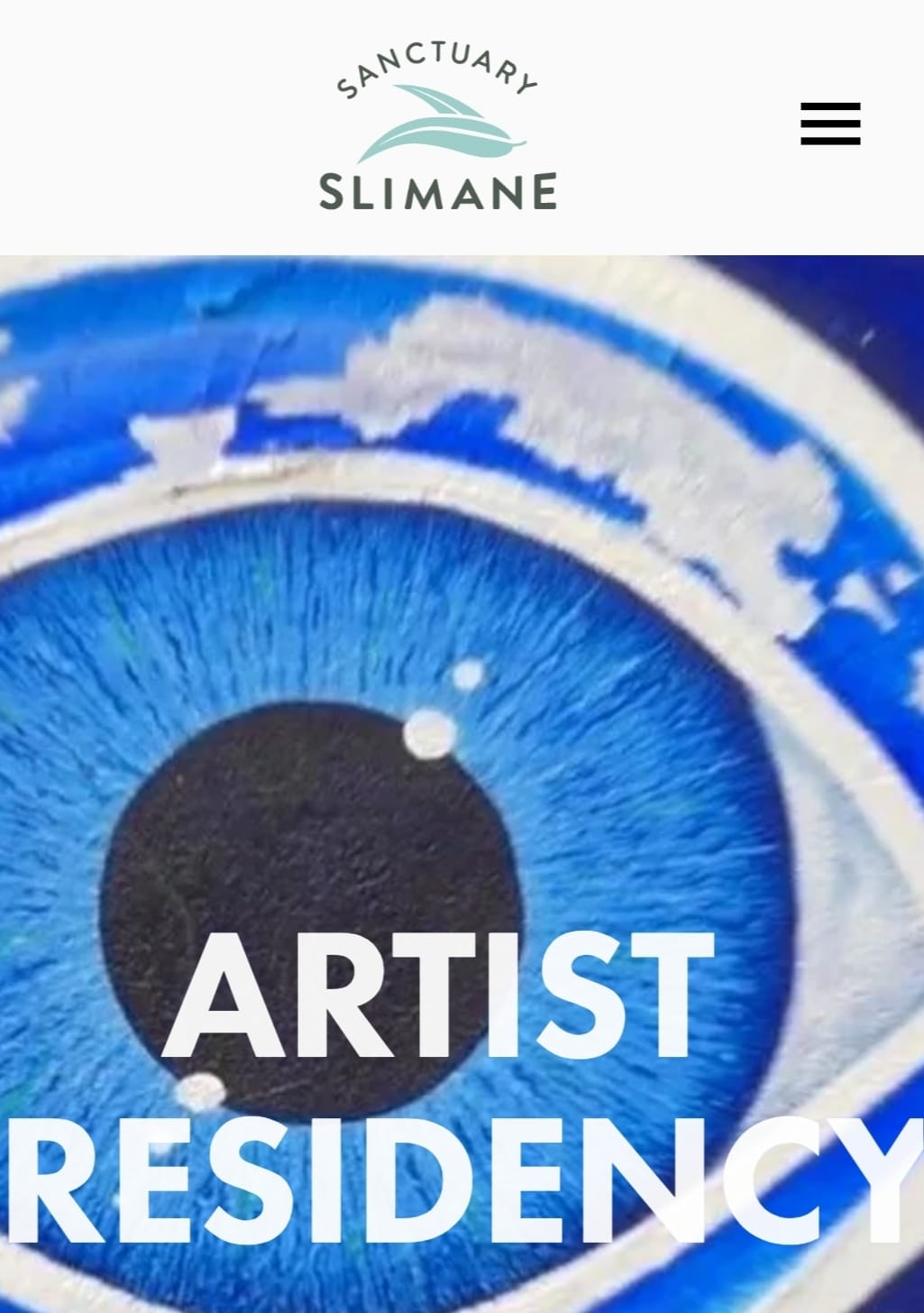
My proposal for an artist residency at Sanctuary Slimane, near Marrakech, has been accepted. It is a sustainable farm whose founder is also a bookseller and publisher.
I will spend the entire month of September there writing short stories set in Morocco and participating in the social and cultural initiatives led by my hosts. Lastly, it will be a chance to practice the bit of Arabic I’ve learned after a year of classes... I have a feeling it’s going to be a wonderful experience.
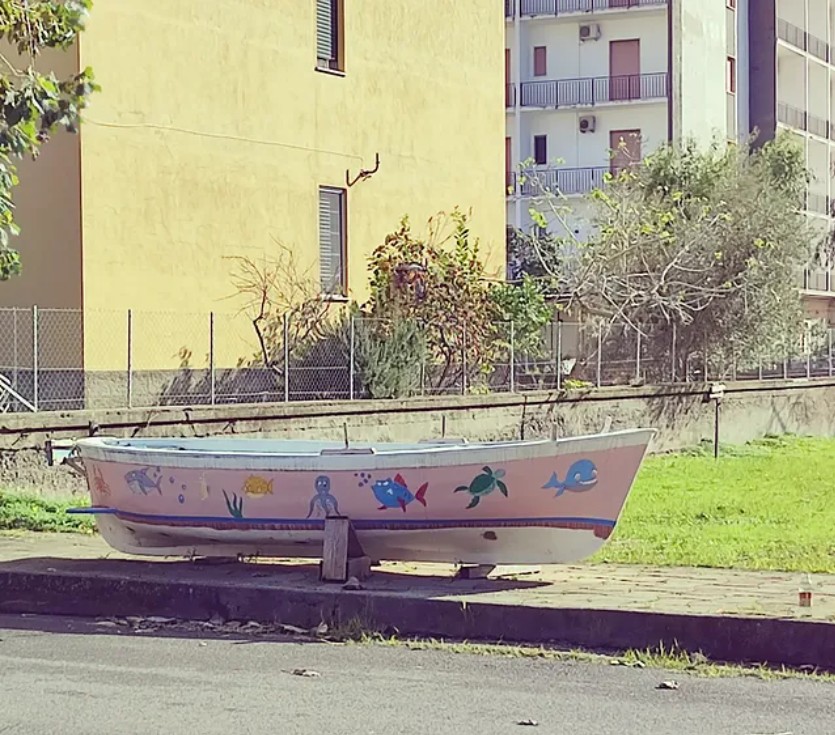
My novel Mammaliturchi! is set in an imaginary town on the Cilento coast. One day, while walking through the streets of Praia a Mare, I came across this somewhat surreal scene: a traditional fishing boat (“gozzo”) “parked” right on the sidewalk.
The novel’s opening scene instantly came to mind, where, among other things, I describe the locals, and I knew right away that I had to bear witness to what I had just seen. So, as soon as I got home, I added a sentence to the text I had already written. You can find it at the end of this short excerpt.
On that beautiful morning, then, those who worked at sea blessed their trade, and truth be told, the vast majority of the natives truly seemed forged by the sea, judging by the color and tone of their skin—from which a swipe of a finger could scrape off a streak of salt—by the nimble robustness of their bodies, by the practical nonchalance of their clothing, by the essential and precise gestures of a sailor facing a storm. [...] It is as though one day the land had sneaked up on them from behind and they had reluctantly adapted to the busy streets, to the far too tall shadows and bright colors of the new buildings climbing up the hill, to the muggy heat rising from the asphalt and concrete. All those earthly excrescences, which over time had grown denser and more brazen, seemed to press upon them to cast them back into the sea from which they came, thus ridding itself of their troublesome and ungrateful presence. However, there was no shortage of pockets of resistance: the sea infiltrated the mainland in the form of small boats and little “gozzi” left in storage on the sidewalks or in the gardens, where long ropes often lay coiled up like large, sleeping dogs.
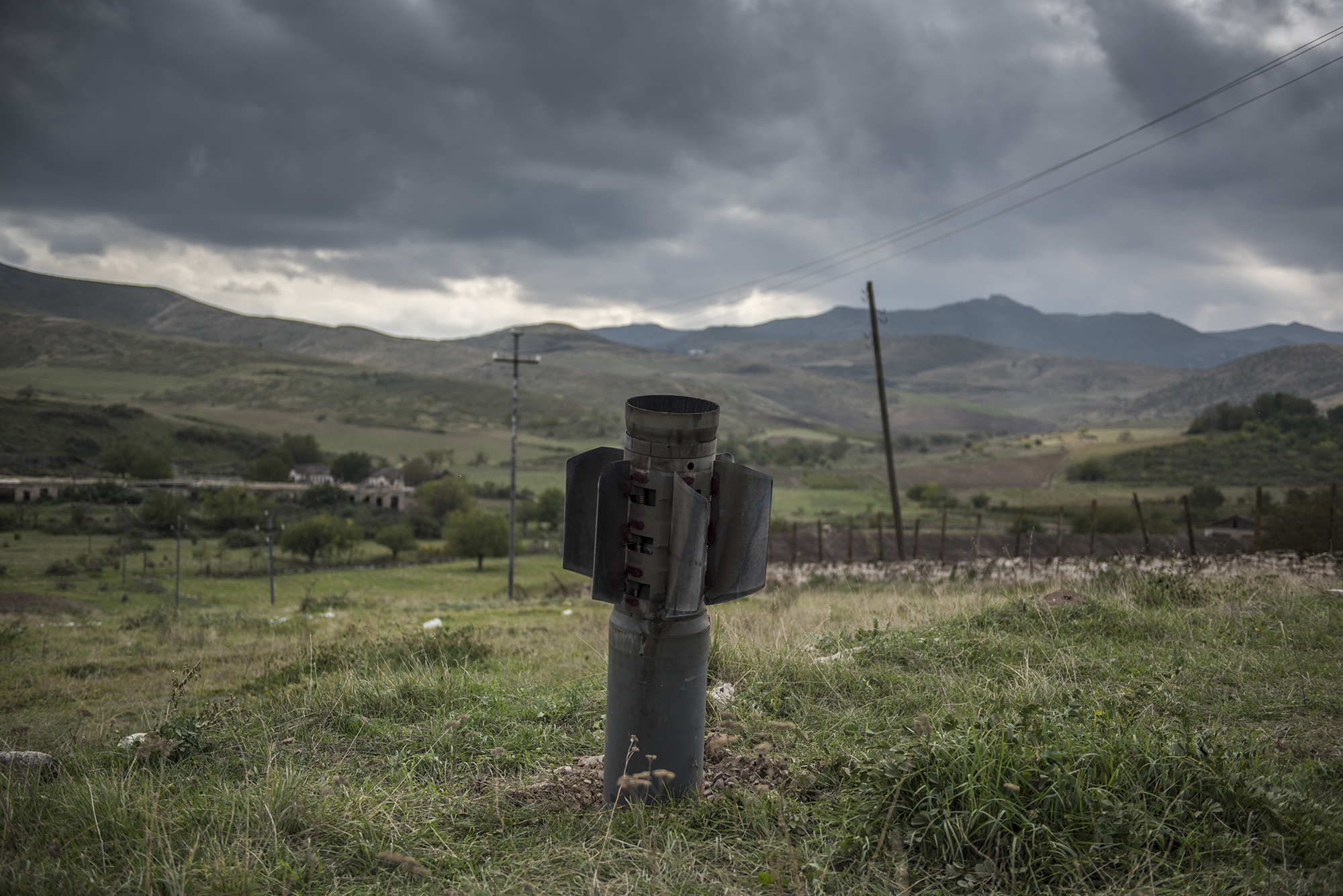
My short story In Azat’s Field (that you can read in Italian by following the link in the “Selected Works” section) was inspired by this photo taken in Martuni by Valery Melnikov, who kindly authorized me to use it. The photo was awarded at the World Press Photo exhibition, and it was actually while visiting the exhibition in Valencia that I first discovered it.
I remember my first thought upon seeing it was: “Imagine the sheer anxiety of the locals when they found this unexploded missile in one of their fields.” From there, I began to imagine a tragicomic story narrated by one of the villagers. An early version of the story was published in Spain in the magazine «Papenfuss». Later, when I submitted it to the Italian magazine «Altri animali», something interesting happened: the editor who read it replied that they found the idea compelling, but they would only publish it if I developed it further. I told them I absolutely would, and a few days later, during a flight, I finally enriched the story with new episodes. When I sent it back, the response was, fortunately, very positive. Among my short stories, In Azat’s Field is perhaps the one that has received the most recognition. In fact, besides being published in Italian and Spanish, the Valencian version won the Short Story Competition Real Vila de Guardamar.
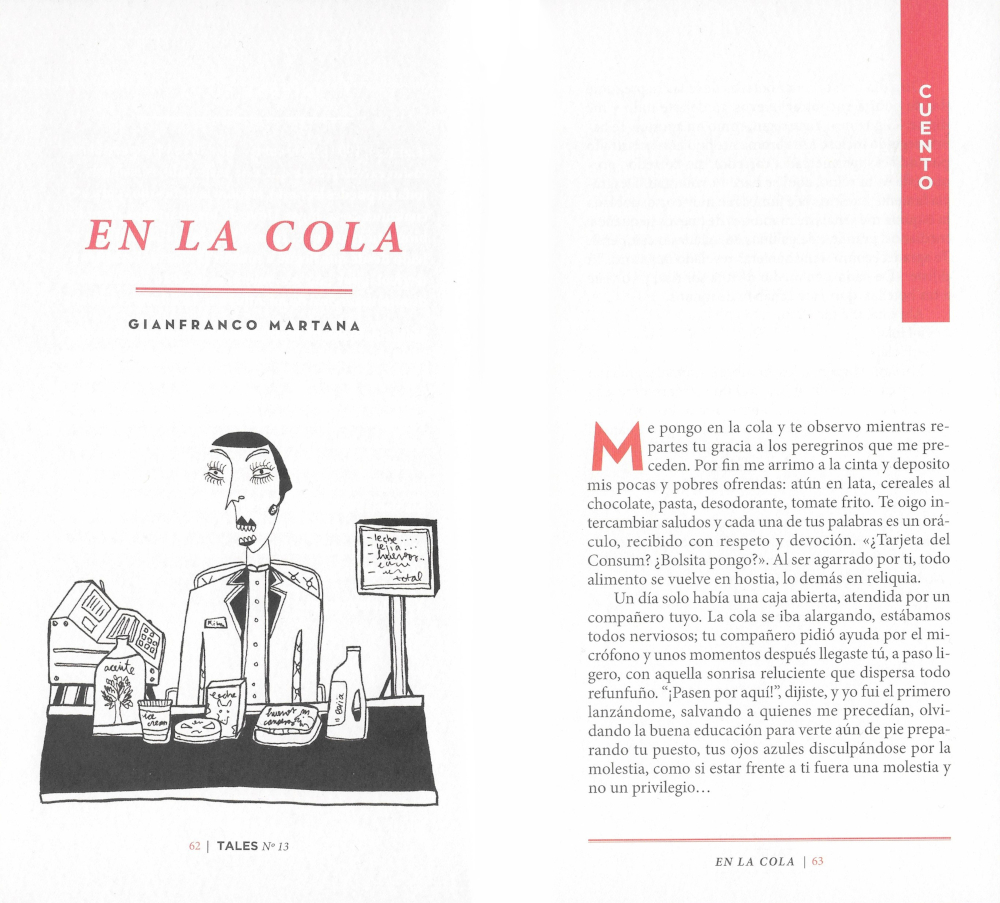
Among my short stories published in Spain, there is one that came out in Tales, Spain’s finest short story magazine. Throughout its run, Tales published top-tier writers and critics.
Unfortunately, like many literary magazines, it eventually closed down, but before that happened, I was lucky enough to be among the three winners of a contest held for the magazine’s readers. The prize was the publication, in issue 13, of En la cola (In the Queue), a tragicomic story about the impossible love between a customer and a supermarket cashier.
If something you read here sparked your curiosity, I’d love to hear from you.